To determine: Is the project good/beneficial for the community?
- Overview
This project is a large, high-technology project that will have an impact on the host communities and surrounding areas. The construction of a deep geological repository is conducted in phases, including siting, site characterization, licensing, design and construction. This project will involve scientists, Indigenous Knowledge Holders, engineers, professionals, tradespeople, public engagement researchers and communicators, and many others, who will be working and potentially living in the community.
The project also offers employment and income revenue to the siting area and host province, including the opportunity for the creation of job training, the development of transferable skills and capacity building. Local businesses, including Indigenous-owned businesses, will be given opportunities to support economic, cultural and environmental sustainability.
Beyond ensuring safety, the NWMO’s commitment to any host community and region is that its long-term well-being or quality of life will be fostered through its participation in this project.
We understand that interested communities are best positioned to assess their long-term interests, and ultimately decide to what extent the project is compatible with their community members’ vision and aspirations. It is therefore important that interested communities assess whether they are ready to manage economic growth while ensuring they maintain the long-term health and sustainability of their community and region. We also understand that there is no universal template to assess community well-being. The assessment approach is shaped by the specific social, economic and cultural conditions of each community.
We are grateful to the Indigenous and municipal communities we have worked with and to members of the Council of Elders and Youth who have helped us to better understand what fostering well-being might look like in various communities.
The following well-being assessment framework is proposed as a high-level guide that potential host communities may wish to consider as they explore how this project can be implemented in a manner that will foster their well-being or quality of life and that of surrounding areas. The framework needs to be adapted and refined to meet the specific needs, and social, cultural and spiritual practices of each community, including the role of Indigenous Knowledge.
- Assessment steps
The framework involves potential host communities and the NWMO working collaboratively through the following activities and milestones:
- Engage Indigenous and municipal community members to develop an initial long-term community well-being vision without considering the project, if not already available;
- Engage in sustained two-way dialogues where the NWMO learns about the community and the community learns about the safety, environmental, social, cultural and economic aspects of the project;
- Update the community’s long-term well-being vision through layering the various aspects of the project on community members’ priorities, concerns and aspirations;
- Assess the project benefits and impacts through a wide range of environmental, socio-economic and cultural assessments, considering community members’ questions, concerns and priorities;
- Identify possible project implementation plans and mitigations the NWMO would need to put in place to ensure that the project helps foster well-being, which would be reflected in a hosting agreement between the community and the NWMO; and
- Potential host communities make an informed decision on willingness to host the project.
These suggested activities and milestones are supported by sustained engagement, learning and awareness-building programs, and our Indigenous Knowledge Policy (2020) and Reconciliation Policy (2019), within the siting area and the region.
The shape and manner of community well-being assessments will be designed and implemented considering each community’s needs and its internal engagement and decision-making processes, and the need for independent assessments where required.
- Ongoing engagement, learning and awareness building

Figure D1: Community well-being framework: These are suggested activities to support communities to make an informed decision. In considering the above framework, and to ensure that well-being assessments cover the interests of a wide cross-section of the community, the NWMO encourages Indigenous and municipal communities to consider a holistic approach. It could include key elements of the sustainable livelihood framework such as people or human assets, infrastructure or physical assets, society and cultural or social assets, natural environment or natural assets, and spiritual assets. This framework is the result of the many years of dialogue among Canadians, Indigenous Peoples and the NWMO.
Table D1 outlines community well-being criteria based on growing international experience in establishing factors that contribute to the well-being of communities in which large projects such as this one are implemented. They are proposed as a starting point for discussions with interested communities and would be adapted to address the specific needs, questions, concerns and priorities of each community.
Low performance on any one of these factors would not exclude a community from consideration. The ability of the community to benefit from the project, and the resources that would be required from the NWMO to support the community in achieving this benefit, would be a consideration in the selection of a site. This applies after all safety considerations have been satisfied, along with other site selection factors outlined in this document.
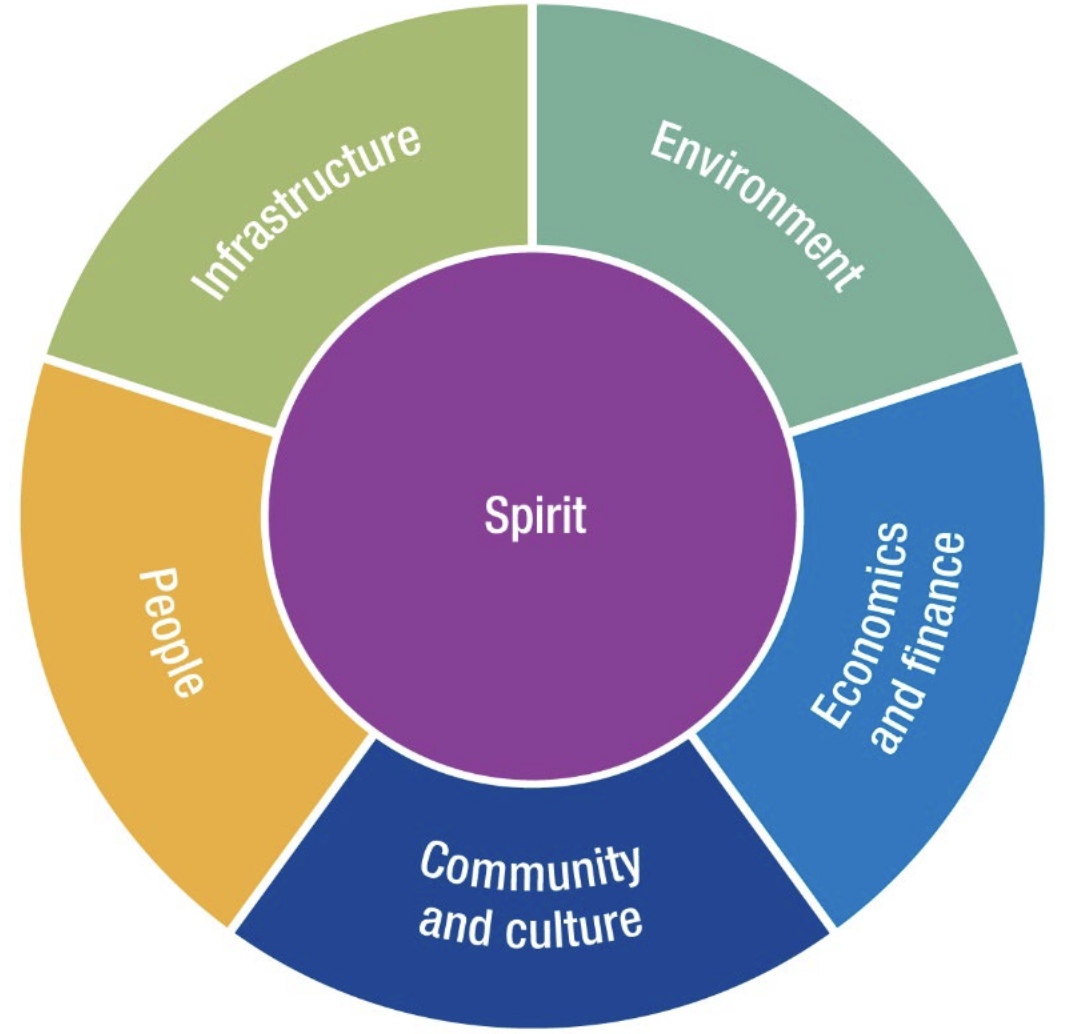
Figure D2: These are factors for communities to consider while discussing well-being. - Community well-being criteria
Community well-being criteria Evaluation factors Potential social, economic and cultural effects during the implementation phase of the project, including factors identified by Indigenous Knowledge Sites will be evaluated against the extent to which positive and negative effects on the host community can be addressed during the implementation phase of the project, including the following areas:
- Cultural beliefs and practices;
- Health and safety of residents and the community;
- Sustainable built and natural environments;
- Local and regional economy and employment;
- Community administration and decision-making processes; and
- Balanced growth and healthy, livable community.
Potential for enhancement of the community’s and the region’s long-term sustainability through implementation of the project, including factors identified by Indigenous Knowledge Sites will be evaluated against the extent to which positive and negative effects of the project on long-term sustainability of the host community and region can be addressed in the following areas:
- Health, safety and inclusiveness/cohesion of the community;
- Sustainable built and natural environments;
- Dynamic resilience of the economy;
- Community decision-making processes; and
- Balanced growth and healthy, livable community.
Potential to avoid ecologically sensitive areas and locally significant features, including factors identified by Indigenous Knowledge Sites will be evaluated for the following:
- Ability to avoid ecologically sensitive areas and locally significant features;
- Ability to protect water; and
- Ability to avoid or minimize impacts on culturally significant sites identified by Indigenous communities.
Potential for physical and social infrastructure to adapt to changes resulting from the project Sites will be evaluated for the following:
- The availability of physical infrastructure required to implement the project;
- The ability of the community, and the social infrastructure it has in place, to adapt to changes resulting from the project; and
- The NWMO resources required to put in place physical and social infrastructure needed to support the project.